Note: The scenarios and projections on this page are illustrative examples based on research findings, not actual implementations. They represent potential applications of M2M technology.
How It Works
The M2M marketplace enables autonomous transactions through five key steps
Data Providers Publish
IoT devices and sensors publish real-time data streams (weather, soil moisture, energy production, health metrics) to the marketplace.
Brokers Refine
Value-added brokers aggregate, clean, and standardize raw data into high-quality insights that solve specific problems.
AI Agents Discover & Buy
Autonomous agents search the marketplace, evaluate options, and automatically purchase the data or compute services they need.
Smart Contracts Execute
Transactions are automatically verified and settled through smart contracts on a distributed ledger, ensuring trust and transparency.
Action & Impact
AI agents act on the purchased data—optimizing irrigation, reordering supplies, trading energy, or coordinating disaster response.
The M2M for Good Ecosystem
Three interconnected roles work together to create a real-time economy for humanitarian impact
IoT Devices
Data Providers
Sensors, meters, and connected devices that generate valuable real-time data streams.
Value-Added Brokers
Data Refiners
Organizations that aggregate, clean, and enrich raw data into actionable insights.
AI Agents
Data Consumers
Autonomous systems that purchase and act on data to serve humanitarian goals.
These three roles interact through a trusted marketplace powered by smart contracts, distributed ledger technology, and privacy-preserving mechanisms to ensure secure, transparent, and equitable data exchange.
Projected Impact Potential
Based on research analysis and comparable technology deployments
Potential Applications
These illustrative scenarios show how M2M technology could be applied to address real-world challenges, based on peer-reviewed research.
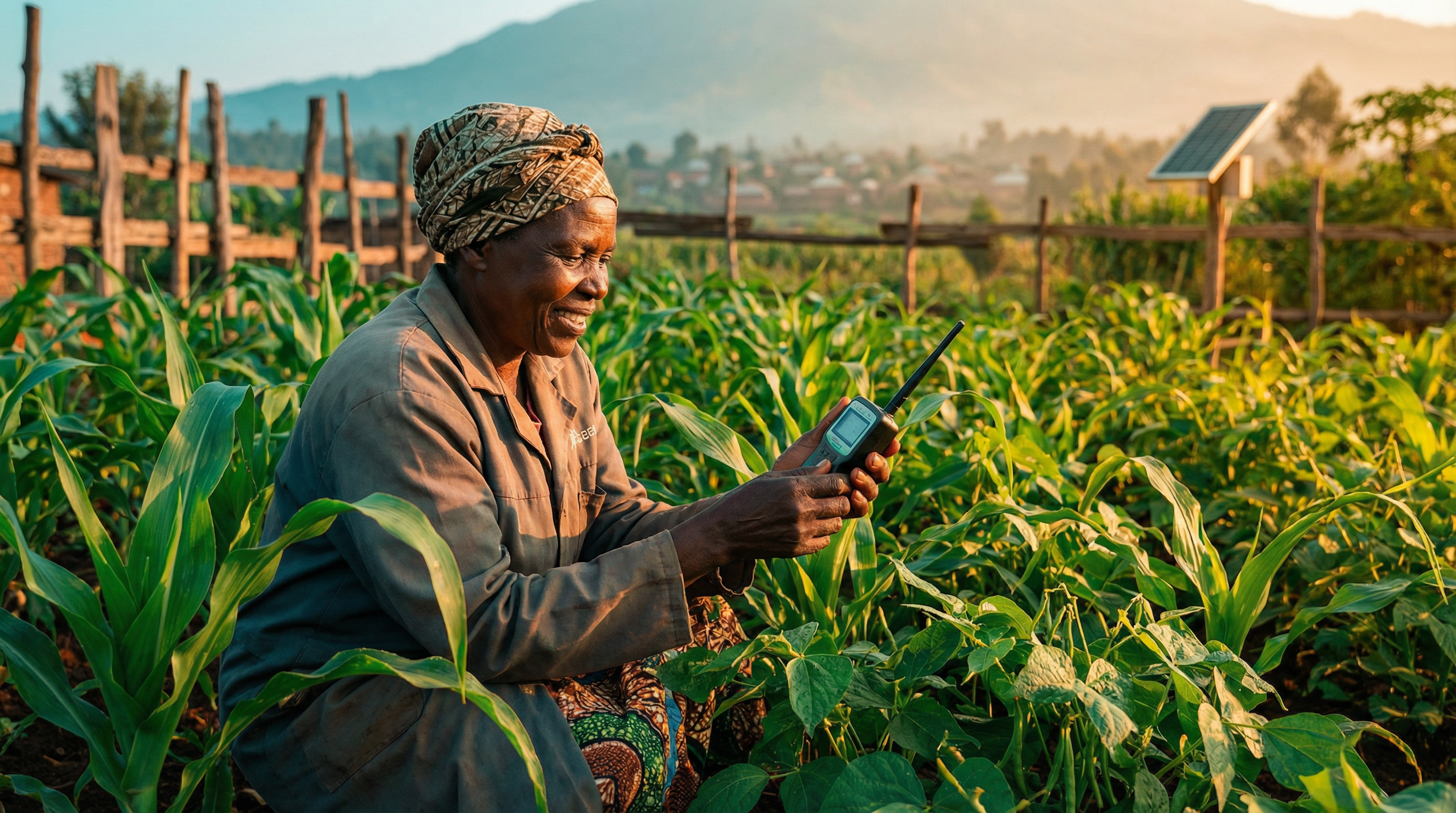
Precision Agriculture for Smallholder Farmers
IoT soil sensors and weather stations could share real-time data through M2M marketplaces, enabling smallholder farmers to optimize irrigation and potentially reduce crop losses significantly.
Scenario: Imagine a farmer receiving automated alerts about optimal watering times based on soil moisture data purchased from nearby sensors, reducing water waste while improving yields.

Automated Healthcare Supply Chains
Autonomous supply chain management could connect rural clinics, using M2M transactions to automatically reorder medicines when stocks run low, potentially reducing stockouts dramatically.
Scenario: Picture a clinic where inventory sensors automatically trigger medicine orders when supplies drop below threshold levels, ensuring continuous availability without manual intervention.

Peer-to-Peer Solar Energy Trading
Peer-to-peer energy trading could enable households to buy and sell excess solar power through smart meters, potentially bringing affordable electricity to underserved communities.
Scenario: Envision a community where homes with solar panels automatically sell excess energy to neighbors during peak production, creating a self-sustaining local energy economy.

Coordinated Disaster Response
During natural disasters, M2M data exchange could coordinate drone surveys, supply logistics, and needs assessments, potentially reducing response times and improving aid distribution.
Scenario: Consider a scenario where drones, sensors, and logistics systems automatically share data to identify the most urgent needs and route supplies efficiently without human bottlenecks.
Grounded in Research
These potential applications are derived from analysis of 115+ peer-reviewed studies on autonomous M2M transactions, blockchain-based data marketplaces, and IoT systems for social good. While these scenarios are illustrative, the underlying technology and mechanisms are well-documented in academic literature.